
Long before NFTs had a name, one anonymous London artist was making work about death, anxiety, and the digital condition. Now the world has caught up.
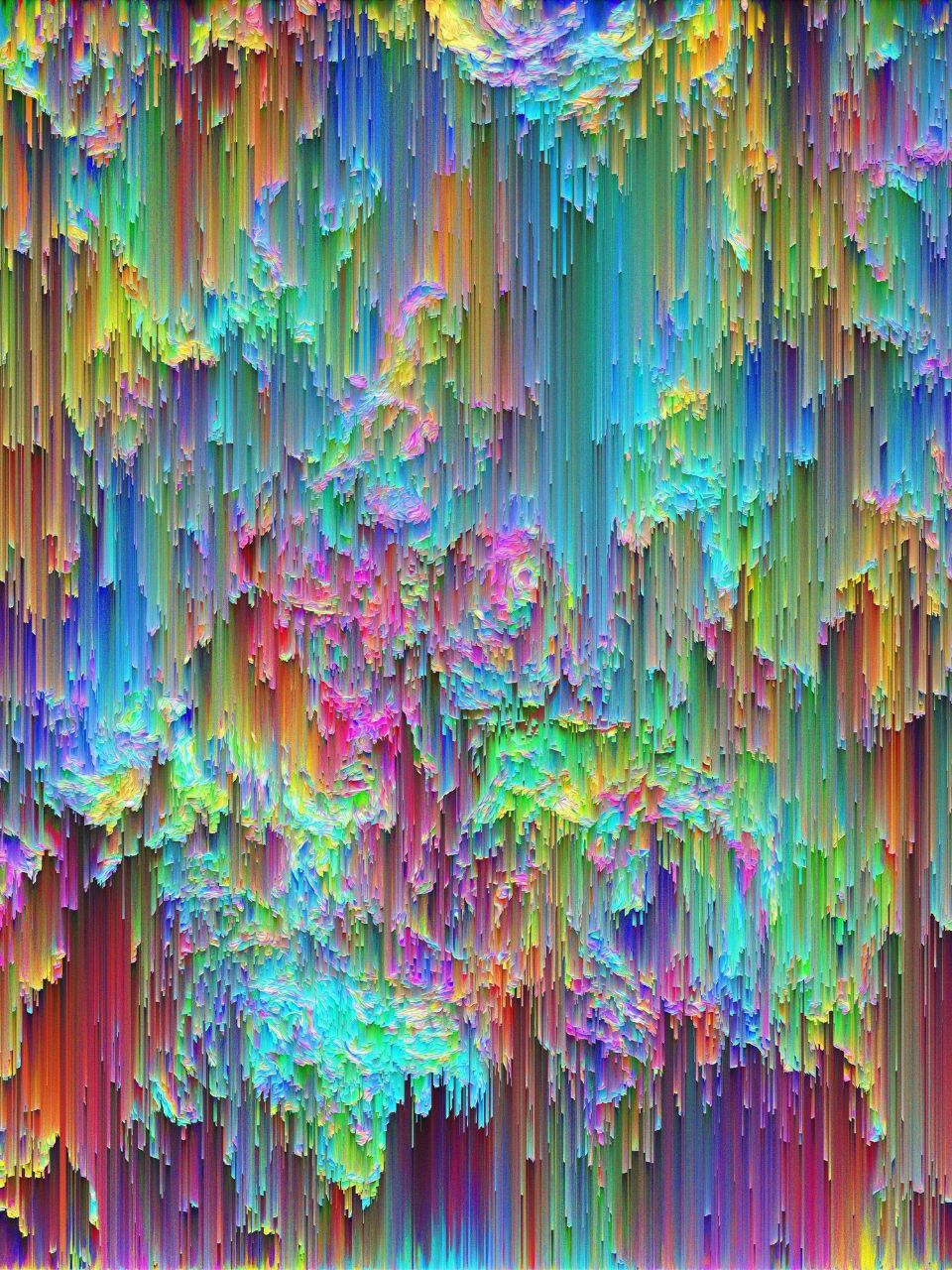
here is a gif that has been circulating in certain corners of the internet since around 2017. A pixelated skull, looping endlessly, its jaw opening and closing in what might be a scream or a laugh — it is impossible to tell. The artist behind it goes by XCOPY. For most of the people who know that name, that gif is their introduction to one of the most significant artists working in any medium right now.
XCOPY is anonymous. Based in London, they have never shown their face publicly and rarely speak in full sentences when they do give interviews. What they have done is spend fifteen years building an obsessive, consistent, visually distinct body of work about anxiety, death, the glitch, and the particular dread of being conscious in a digital world. The work looked like nothing else when it started. It still looks like nothing else now.
The NFT market didn't create XCOPY — it found them. The artist had been posting work on Tumblr, DeviantArt, and early crypto art platforms for years before SuperRare and Foundation turned digital art into a market. What the market did was give the work a price, and the prices have been significant.
Every XCOPY piece operates on the same formal logic: a compressed, lo-fi aesthetic that looks like something rendered on hardware that is dying. The colour palettes are acidic — hot pinks, sickly greens, blown-out whites. The forms are human-adjacent but corrupted. The animation is always slightly wrong, looping at irregular intervals, refusing the satisfaction of a clean cycle.
This is not accidental. The degraded aesthetic is the point. In an era of 4K resolution and hyperrealism, XCOPY makes work that looks broken. The glitch is not a stylistic accident — it is the content. The work is about systems failing, about consciousness as a kind of software that keeps crashing, about what it feels like to be alive in a moment that processes everything too fast for any of it to mean anything.
"I make things that feel like the inside of my head when it's not working properly. Most people seem to relate to that.
— XCOPY, 2023
The recurring motifs — skulls, screens, hands reaching toward something out of frame — feel archetypal rather than decorative. XCOPY is working in a vernacular that is entirely native to the internet: GIF culture, early web aesthetics, the visual language of forums and imageboards. But the emotional register is classical. This is vanitas painting for the digital age, memento mori for an audience that grew up watching pixels die.
In 2021, as NFT trading volume exploded into the billions, XCOPY's work went from being known to a small community of collectors to being discussed in the same breath as Basquiat and Hirst. A piece called Right-click and Save As guy — a single GIF, 1/1 — sold at Christie's for $7.1 million. The work's title was itself a provocation: a direct address to the most common criticism of NFTs, turned into art, turned into one of the most expensive digital works ever sold.
The critical response was divided in the way that responses to digital art still often are — confusion at the prices, skepticism at the medium, and a failure to engage with the work on its own terms. What most critics missed is that XCOPY was not new. The work had a decade of history behind it. The prices were new. The work was not.
CA — Concept Avenir
You've been making this work since 2011 — long before any of the infrastructure for selling it existed. What kept you going when there was no market?
The work wasn't waiting for a market. I was making it because I had to make it. I don't think that's a romantic answer — I just don't know how to not make things. The fact that there was nowhere to sell it was irrelevant because the impulse to make it had nothing to do with selling.
CA — Concept Avenir
The aesthetic is very specific — the glitch, the lo-fi compression, the loops that never quite resolve. Is that a deliberate formal choice or did it emerge naturally?
Both. I grew up with hardware that failed constantly. Screens that flickered, connections that dropped, renders that crashed halfway through. That's what computers actually looked like when I started. The glitch isn't a stylistic decision — it's a faithful representation of the environment I was making work in. It just happens that the environment was also a perfect metaphor for how anxiety feels. The system keeps failing and you can't figure out why.
CA — Concept Avenir
What would you say to an artist starting now — someone who wants to make digital art but is intimidated by the market, the speculation, all of it?
Ignore it. Genuinely. Make things you can't stop thinking about and put them online. The market is real but it has nothing to do with whether the work is good. The work has to be good first. Everything else is noise.
Covering digital art and NFT culture. Curated, vetted, free to read.