
A look at the iconic moments that made Robness one of crypto art's most important and enduring figures.
n 2016, crypto art was a small group of people in chatrooms trading digital cards on Counterparty, a Bitcoin-based protocol, with almost no infrastructure around them. No OpenSea. No floor prices. No real secondary market. No big collectors sitting on the sidelines waiting to enter. Most people did not even have the language for what these things were yet. "NFT" was not the word being used.
Which is why that era matters.
There was no obvious money in it. No career path. No roadmap. The people there were not chasing a trend because there was no trend to chase. They were testing a belief: that digital objects could have ownership, provenance, and cultural value without needing permission from the traditional art world.
Robness was one of those people.
At the time, he was sleeping in his car near the beach in Redondo Beach, California, picking up odd jobs, and teaching himself the tools he needed to become the artist he wanted to be. Before most people had even heard of Ethereum, he was already beta testing Spells of Genesis, one of the earliest blockchain games ever made.

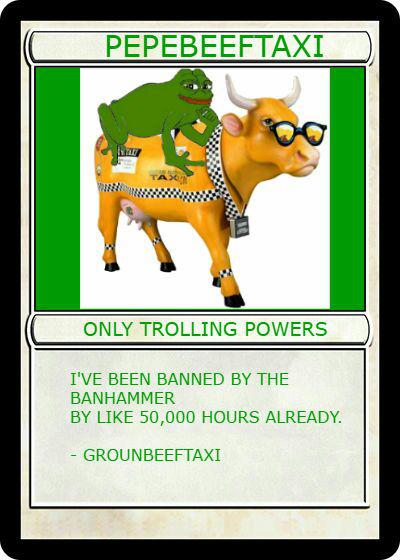
Before Rare Pepe became its own movement, someone tried to sell a zip file full of Pepe memes they had collected from across the internet for a ridiculous amount of money. On the surface, it sounded stupid. But underneath that absurdity was the question that would end up sitting at the centre of crypto art.
Could internet culture be preserved? Could something copied a million times still have an original version? Could a meme, a file, a card, or an image have value beyond being something people screenshot, repost, and forget?
Robness and the people around him saw blockchain as a possible answer. A digital image could be attached to a token, and suddenly it had a history. It had a creator. It had an owner. It could move from one person to another without needing a platform, gallery, or middleman to approve it.
That mattered because most of them had already spent years watching work get copied, reposted, stolen, stripped of context, and separated from the person who made it. The internet made sharing easy, but it also made authorship almost impossible to protect. Blockchain offered a way to keep the openness of internet culture while giving digital work a record that could not be erased as easily.
That was the idea the early scene was built around. They were not just playing with trading cards. They were stress-testing the basic logic that the entire NFT market would later be built on.
By 2019, Robness had moved further into Ethereum. SuperRare was gaining credibility, while KnownOrigin and Rarible were also growing. What started as a tiny group of people on the edge of crypto was turning into something the wider art and tech world was beginning to notice.
Robness has spoken about the artists who helped build that era alongside him, including XCOPY, Missalsimpson, Max Osiris, Trevor Jones, Robbie Barrat, Gary Cartlidge, Coldie, and others. They came from different places, worked in different styles, and were not all shaped by traditional art backgrounds. What connected them was the internet itself. They found each other online, mostly through Twitter, because that was where the Ethereum and crypto communities were already gathering.
In Robness’s words, they knew the people building these blockchains were on Twitter.
So that is where the art scene grew.
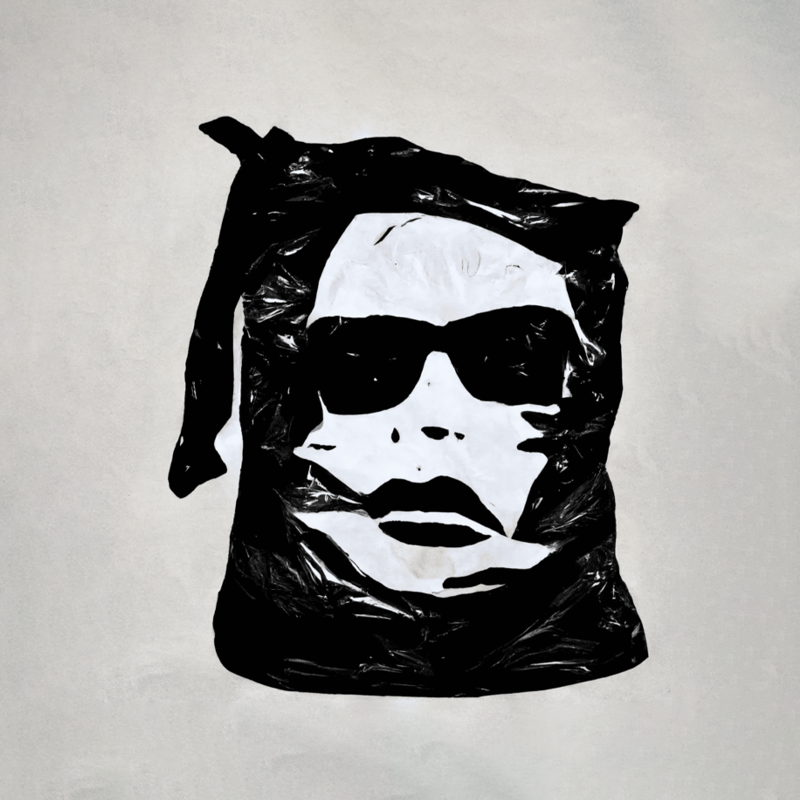
On January 23, 2020, Robness minted a GIF of a black 64-gallon trash can on SuperRare. The image came from the Home Depot website. He ran it through PhotoMosh, glitched it, and listed it as an artwork: a stock product image, a trash can, a glitch tool, and an NFT marketplace that wanted to be taken seriously.
Robness was making a digital ready-made. The reference point was hard to miss. In 1917, Marcel Duchamp submitted a urinal to an exhibition and called it Fountain, forcing people to ask what actually makes something art. Robness was asking the same question, only this time the gallery was a blockchain marketplace and the object was a hardware store bin.
SuperRare removed the piece and banned him. The platform’s reasoning centred on copyright, arguing that the image had not been transformed enough from the original source. But the decision also came at a moment when SuperRare was trying to position itself as a credible fine art marketplace. Influential collectors had money in the ecosystem. The platform had a reputation to protect. A glitched trash can sitting next to works selling for thousands of dollars made some people uncomfortable, so the curators drew a line.
What they did not expect was the reaction. Artists began minting trash can variants across platforms. The hashtag #TrashArt spread. Eric P. Rhodes was suspended after threatening to mint a remix in solidarity, and Max Osiris was banned for related work. What began as one removed artwork became a much larger fight about who gets to decide what crypto art is allowed to be.
That was the real issue: a scene built around decentralisation and permissionless creativity had suddenly run into the same old problem of curators, collectors, platforms, and taste-makers deciding what counted as legitimate. The community’s response was to make more trash.
Thousands of variants were minted. Artists who had never met Robness made their own versions of the Toter, and the image spread across chains, styles, and communities. It became a meme, a protest, an art movement, and a stress test for the values everyone claimed to believe in.
Robness could have tried to own the idea, but he chose not to. His view was simple: why would you shut that down? The open-source spread of the image was part of the work.
"THE #TRASHART SAGA EMANATED WITH NO PRECONCEIVED NOTIONS AND IT'S STILL ASTONISHING TO WITNESS TO THIS DAY." - ROBNESS
Robness was eventually reinstated through community pressure and a vote. The 64 Gallon Toter, a piece made in minutes from a stock hardware store image, later sold on secondary for around $252,000. It is now listed on OpenSea for $80 million.
The early crypto artists were not following a business strategy, and that matters.
Robness, Max Osiris, Gary Cartlidge, XCOPY, Coldie, and the others from that era were not sitting around trying to map out a new asset class. They were acting on a conviction that digital art deserved ownership, history, and a market that did not need permission from the institutions that had ignored them.
For all its flaws, the early blockchain world offered something rare: a system where your background mattered less than what you made and whether people responded to it. You did not need a gallery. You did not need a degree. You did not need a collector to invite you into the room. You could just mint the work.
That sounds obvious now, but at the time it was a radical shift.
When people called his work lazy, naive, or not real art, Robness pointed to Astor Piazzolla, the tango composer who was rejected for pushing tango beyond its traditional form. Piazzolla was mocked before he became one of the defining figures of the genre. Robness saw the same pattern in crypto art. New forms are usually dismissed before they are understood.
Sometimes the backlash is the signal.
That attitude shaped the whole early scene: build without permission, own what you make, ignore the gatekeepers, and let the work move. So when the Trash Art ban happened, it hit harder than a single artist being removed from a single platform. It felt like crypto art was being dragged back into the exact system it was supposed to challenge.
The early artists built more than images. They helped normalise artist royalties on secondary sales. They proved that digital scarcity could matter. They showed that internet-native work could carry provenance. They fought the first real platform battles around decentralisation, ownership, and artistic freedom.
And most of them did it for years before there was any serious money in the space. That part gets forgotten.
The boom did not create crypto art. The boom arrived after the culture had already been built.
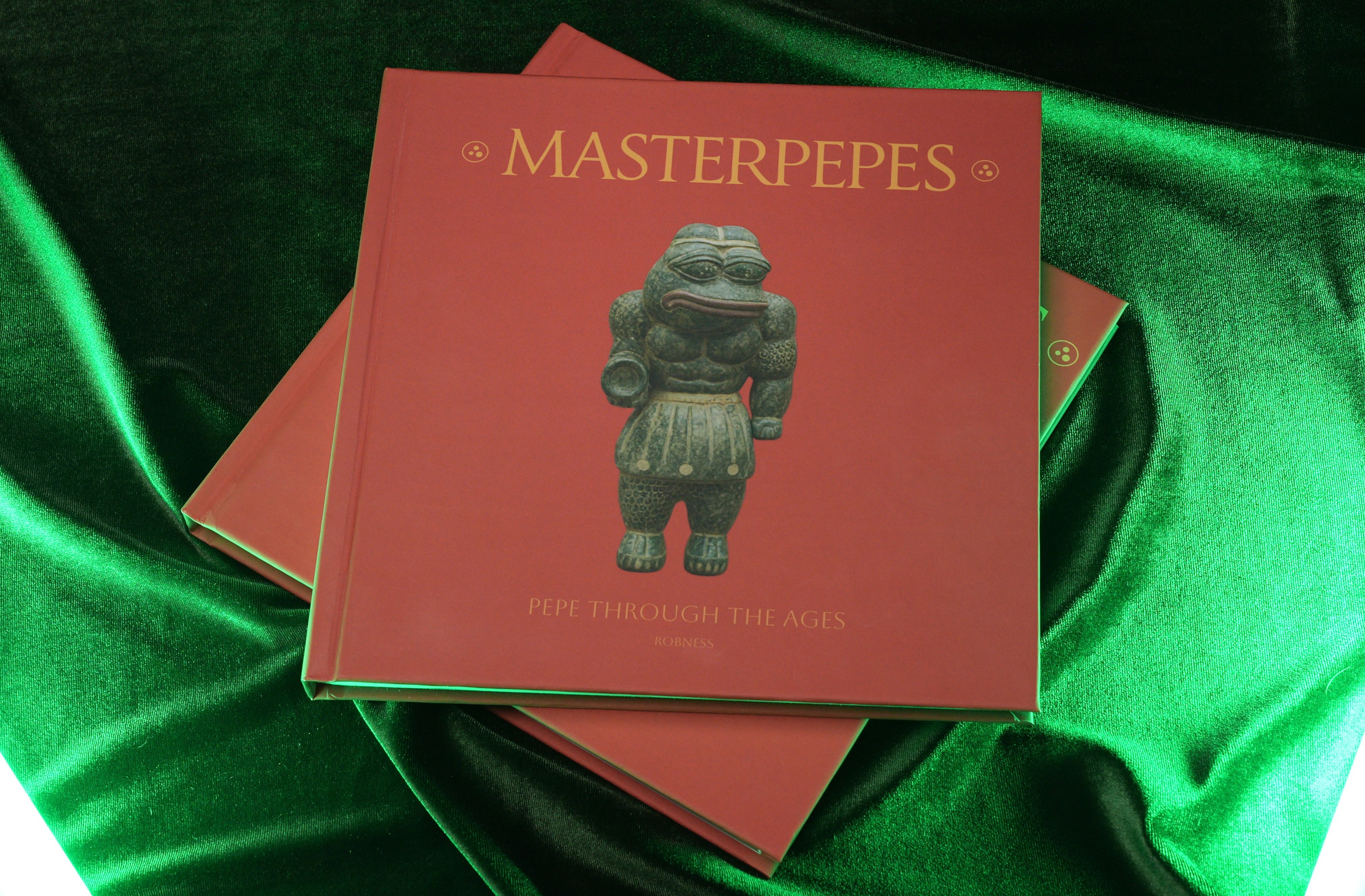
In January 2026, Robness released Masterpepes, a hardcover book that reimagines more than 150 works from art history through Pepe the Frog. The project moves from ancient sculpture through to contemporary art, with each page also existing as an NFT on Bitcoin through Counterparty.
It is absurd, serious, and very Robness.
Limited to 300 collector spots and paired with a companion 3D virtual museum, Masterpepes brings his story back to where it started: Pepe, Bitcoin, Counterparty, and the belief that internet culture deserves to be treated as art history, not just online noise.
He began in 2016 minting Pepe cards on Bitcoin. A decade later, he has taken Pepe through the history of Western art and placed it back on the same chain where his own crypto art story began.
That loop says a lot about Robness. Two of his works are in the Centre Pompidou’s first NFT collection. He appears in TASCHEN’s On NFTs. His work has sold at Sotheby’s. He is also the artist who once minted a McDonald’s job application as an NFT, because the line between art, survival, internet culture, and documentation of modern life has always been thinner than institutions like to admit.
His X bio currently reads: “CURRENTLY REIMAGINING THE GUITAR.”
He has also hinted at something for the NFT world that is not just another artwork, but something he believes could help another creative industry entirely.
Robness has never seemed interested in making crypto art more respectable. He has always seemed more interested in proving that the things people dismiss are usually where the culture is actually moving.

Go beyond the work and get to know the people making it.